




How NAVER Reinvents Search and Recommendations at Scale with Milvus
<20ms Latency at Scale
Supports 5K QPS across 50M+ entities with response times under 20ms.
Multimodal Search
Powers search and recommendations across text, images, video, and audio.
Hybrid Search Architecture
Combines keyword precision with semantic vector search for conversational queries.
Enterprise Reliability
Distributed scalability and high availability ensure always-on service.
Among Milvus's rich vector search capabilities, features such as support for multiple ANN index types, multi-vector support, and hybrid search have proven especially valuable in real-world service environments. As Milvus continues to evolve with new capabilities, NAVER expects even broader applications across its services.
NAVER Engineering Team
About NAVER
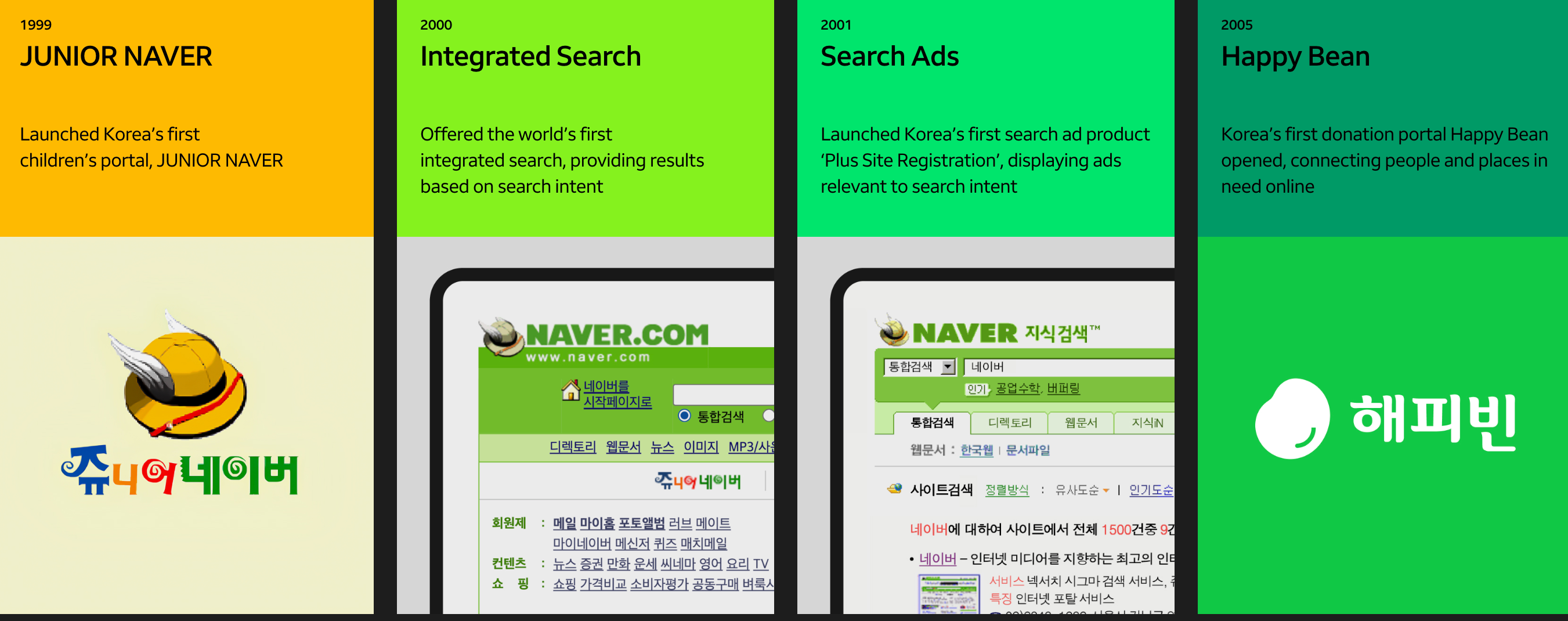
NAVER is South Korea’s leading internet platform company, with over half of the nation’s search market and tens of millions of daily users. Its ecosystem spans Korea’s most widely used search engine, news, blogs, online communities, and the globally popular NAVER Webtoon. Beyond content, NAVER drives e-commerce with NAVER Shopping, powers digital payments through Npay, and delivers healthcare information services.
At the core of NAVER’s success are advanced search and recommendation technologies that enable seamless discovery and engagement across its platforms. As user needs have shifted from keyword-based search to natural language queries and multimodal content, NAVER has turned to vector search to power this new era of discovery. Milvus, a high-performance open-source vector database, is widely deployed across NAVER’s major services to deliver scalable multimodal search, recommendations, and summarization.
The Growing Pains of Keyword-Based Search
For years, NAVER’s search infrastructure relied on inverted index–based text matching. While strong at exact keyword matching, these systems struggled as users began expecting more conversational, natural language interactions. Queries like “What should I do if my child has a fever and won’t eat?” or “comfortable running shoes under $100” require semantic understanding, which keyword search cannot provide.
User behavior was also shifting toward multimodal content such as images, audio, and videos. NAVER’s existing search systems struggled to handle these inputs or support advanced features such as personalized recommendations, summarization, and contextual search.
To address these challenges, NAVER needed a new vector search solution that could handle multimodal and unstructured data at a massive scale. As South Korea’s search market leader with over 50% share, NAVER required a platform that matched both its scale and responsibility. Beyond scale, different NAVER services had varying requirements for entity sizes, collection scales, QPS, and latency. Any new solution had to work broadly across the portfolio, with unified management, monitoring, and flexible APIs for adoption by multiple teams. More specifically, NAVER required:
Ultra Low Latency: for example, one service must search across 50 million entities at 5K QPS, with response times under 20ms.
Distributed Scalability: Ability to scale seamlessly during traffic surges, critical for a platform powering more than half of Korea’s searches.
Operational Reliability: Always-on service with high availability and strong fault tolerance.
Broad Applicability: Flexibility to cover diverse use cases with different entity sizes, collection scales, QPS, and latency requirements.
Usability: Easy adoption by multiple service teams, with unified management, monitoring, and flexible APIs.
The Solution: Transforming Search Architecture with the Milvus Vector Database
NAVER's engineering teams embarked on an extensive evaluation of vector database solutions. The evaluation process considered multiple factors, including performance under enterprise-scale workloads, reliability and fault tolerance capabilities, ease of integration across diverse service architectures, community support, and long-term viability.
Milvus emerged as the clear choice due to its proven stability under high-load production environments and rich vector search capabilities. The database’s support for multiple ANN index types, multi-vector support, and hybrid search functionality aligned perfectly with NAVER's requirements. Additionally, Milvus offered the operational advantages NAVER needed, including unified management and monitoring across deployments, flexible APIs supporting diverse integration patterns, and a strong community backing continuous innovation.
After adopting Milvus, NAVER deployed this vector database across multiple services, creating a unified vector search infrastructure that fundamentally changed how their systems understand and respond to conversational user queries. Rather than replacing their existing keyword-based systems entirely, they created a hybrid approach that combines the precision of traditional search with the semantic understanding of vector search.
This architecture created a foundation that could support not just improved search but entirely new categories of features. Query rewriting capabilities automatically transform user inputs into semantically similar, higher-quality searches that return more relevant results. Natural language processing allows users to search using conversational language instead of having to guess the right keywords. Most importantly, the system now considers user intent and context, not just literal text matches.
Business Impact: From Search to Intelligence
With Milvus, NAVER has gone beyond simply improving natural language query handling to enabling richer, more intelligent features across multiple services. One example is NAVER’s AI Briefing, which provides intelligent summarization by combining user reviews and blog content. This gives users comprehensive overviews of topics without requiring them to read through multiple sources.
In NAVER Healthcare, the impact proved particularly dramatic. Natural language symptom searches now return medically relevant results based on semantic understanding rather than exact keyword matches. This dramatically improves the user experience for health-related queries.
NAVER Shopping experienced a complete transformation in product discovery. With vector search, the platform now recommends similar products based on semantic similarity and leverages a personalization engine that incorporates cart contents, wishlist items, purchase history, search patterns, and even conversation data. This allows users to describe products in natural language and still find exactly what they’re looking for—even without knowing specific names or categories. For NAVER, these capabilities translate into more relevant recommendations, smoother product discovery, and measurable business benefits, including higher conversion rates, increased engagement, and longer time spent on the platform.
The news platform extended its existing content management system with sophisticated vector search capabilities. This enhancement enables automatic detection and removal of duplicate articles through sentence-level similarity, reducing redundancy across the platform. It also powers semantic matching for related-article recommendations, helping users stay engaged with topically relevant stories even when exact keywords don’t align.
Conclusion
By adopting Milvus, NAVER has moved beyond the limitations of keyword-based search to deliver truly semantic and multimodal experiences. This shift has not only improved user satisfaction but also laid the groundwork for entirely new service opportunities.
More NAVER teams are now building on this foundation, applying vector search to power recommendations, summarization, personalization, and other advanced features. As Milvus continues to evolve, this search leader expects its use cases to expand even further—strengthening its position as a leader in large-scale search and recommendation systems.
Looking ahead, NAVER’s vision is to create a seamless discovery ecosystem across all its platforms—where search, recommendations, and content feel personalized and intuitive. With Milvus as a scalable foundation, NAVER can innovate more quickly, deliver greater value to users, and continue to shape the future of intelligent information services.