




Podcast: Using AI to Supercharge Data-Driven Applications with Zilliz
Traditional databases are great for handling structured data, such as information that can easily be captured and categorized in a table. However, unstructured data, accounting for around 80% of the world's data, is not so easily managed. Many companies are struggling with making sense of the massive scale of data they have. In the big data era, how can we tackle the conundrum of meaningful data analysis?
In the new episode of That Digital Show, Frank Liu, AI Tech Lead at Zilliz, explains how AI and machine learning are making it possible for developers to understand and extract more value from unstructured data. This episode is hosted by Jay Jenkins, Tech Strategist and Evangelist at JAPAC - Google Cloud, and Theo Davies, Head of Cloud Sales Enablement at JAPAC - Google Cloud.
Below are some questions discussed in the conversation and their corresponding timestamps. To hear the answers, listen to the whole episode titled "Using Al to Supercharge Data-Driven Applications with Zilliz".
Where does the name Zilliz come from and what does Zilliz do? (04:00)
What are some challenges that make data operational? (07:43)
How have databases evolved to tackle the challenges that volume and complexity pose in meaningful data analysis? (09:00)
What are vector databases and how do they differ from traditional databases? (09:50)
How can vector databases help companies? (11:50)
Could you share some interesting use cases using Milvus? (13:54)
Why Milvus is open-source and free? (15:18)

Keep Reading
How to Choose the Best Embedding Model for RAG in 2026: 10 Models Benchmarked
We benchmarked 10 embedding models on cross-modal, cross-lingual, long-document, and dimension compression tasks. See which one fits your RAG pipeline.
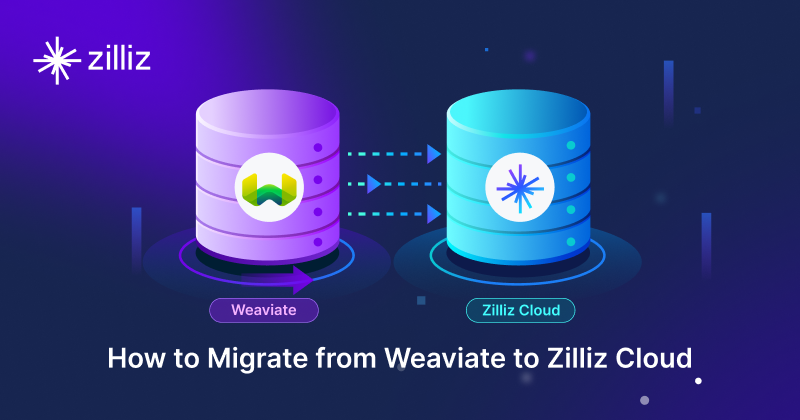
Why Teams Are Migrating from Weaviate to Zilliz Cloud — and How to Do It Seamlessly
Explore how Milvus scales for large datasets and complex queries with advanced features, and discover how to migrate from Weaviate to Zilliz Cloud.
Balancing Precision and Performance: How Zilliz Cloud's New Parameters Help You Optimize Vector Search
Optimize vector search with Zilliz Cloud’s level and recall features to tune accuracy, balance performance, and power AI applications.